Costs of Groceries
October 1424Dearest Reader,
In October 1942, as my father was stationed in Washington State, my grandmother wrote to him describing how profoundly life on the home front had changed. Her letter reflects a nation fully mobilized for war, where shortage, rationing and rising prices had become part of everyday reality. What she shared was not abstract, but lived experience, felt most at the grocery counter:
She wrote:
“The prices are skyrocketing here. I had to pay 55 cents a pound for butter at the A and P Saturday. No beef of any kind. A $10 bill goes about as far as a $5.00 went this time last year. Eggs were fifty cents a dozen.”
By the fall of 1942, the United States had been at war for nearly a year, and the economic consequences were unmistakable. Industrial production had shifted toward military needs. Food, fuel, rubber and metals were redirected to support troops overseas, leaving fewer goods available for civilians. Scarcity, combined with increased demand and rising wages in the war industries, pushed prices upward despite efforts to contain inflation.
Butter, meat and eggs were among the most affected staples. Butter production was limited by shortages of labor and feed, while meat, especially beef, were heavily diverted to supply the armed forces. Eggs fluctuated in price. Even when ration coupons were available, store shelves were often bare.
My grandmother’s observation that “a $10 bill goes about as far as a $5.00 went this time last year” captures the erosion of purchasing power felt by families across the country. Households were expected to adapt, stretching meals and doing without.
Her words show her adjustment and resolve. While my father stood watch on the Pacific Coast, she was managing the vigilance at home by measuring butter, counting dollars and learning, like so many others, how to live within the constraints of wartime America.
Dr. Nancy Watson
Washington
Read More From Nancy
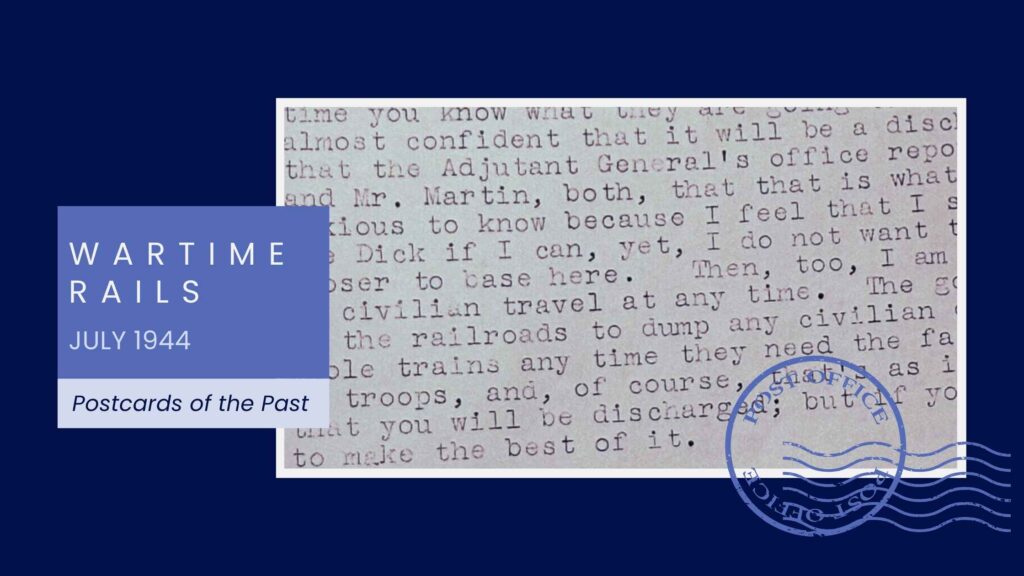
Wartime Rails
On Thursday, July 6, 1944, my grandmother sat at her typewriter once again to write to my father. It seems she wrote every day with letters mixed of small local happenings, the weather and some words of advice for her only son. In this letter her daily life intersects with the larger rhythm of a […]
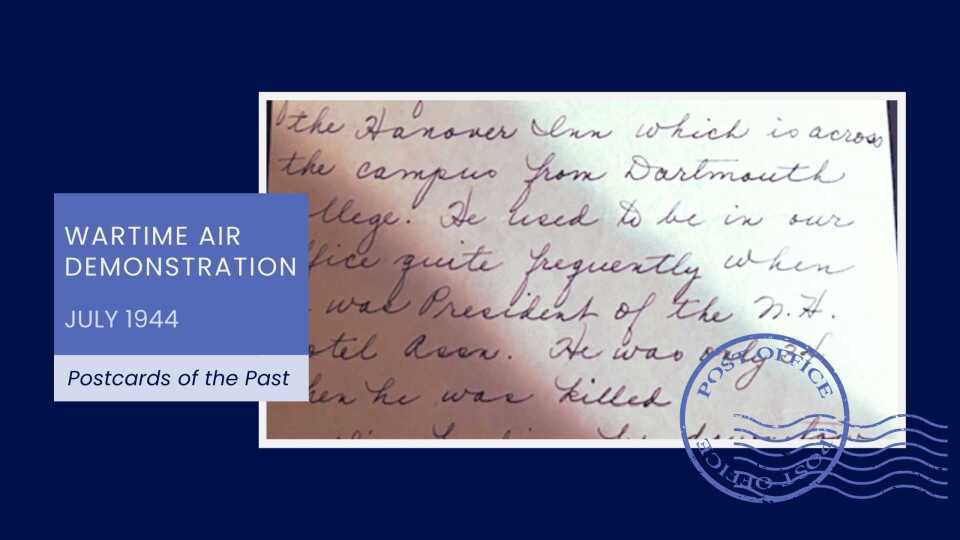
Wartime Air Demonstration
In a letter dated July 28, 1944, my mother responded to news my father had shared about a tragic accident that occurred during an air show. Her words suggest not only how quickly such events traveled through letters and conversations: “Mother read to me what you wrote about that plane accident that occurred while that […]
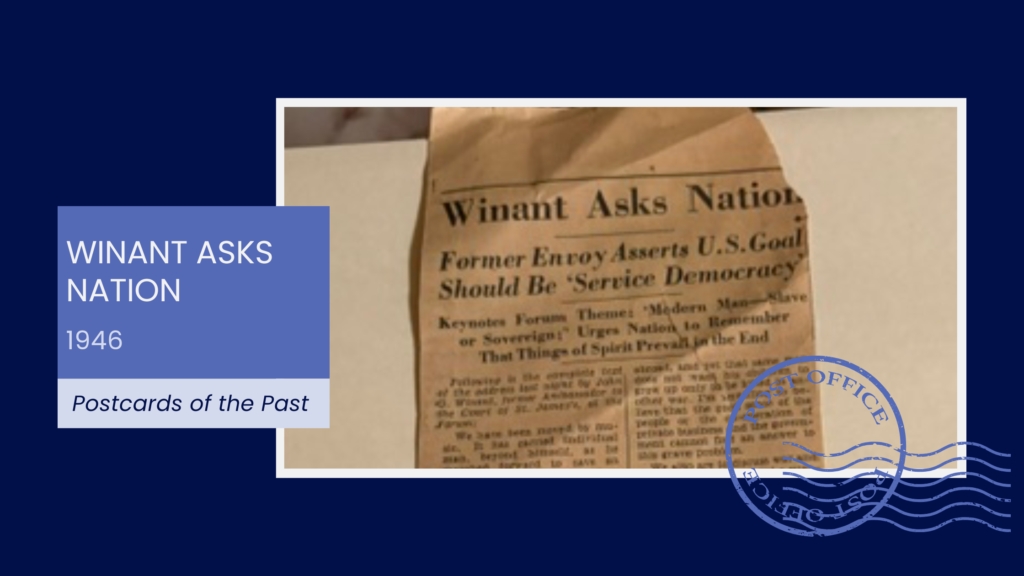
Winant Asks Nation
As I sorted through my mother’s papers, I discovered that this was not the only newspaper clipping she had saved about John Gilbert Winant. There were several. That immediately made me wonder why she followed his life so closely. Winant was more than a public figure in New Hampshire. He was one of the state’s […]

