The Knights’ Halls and the Crusader City
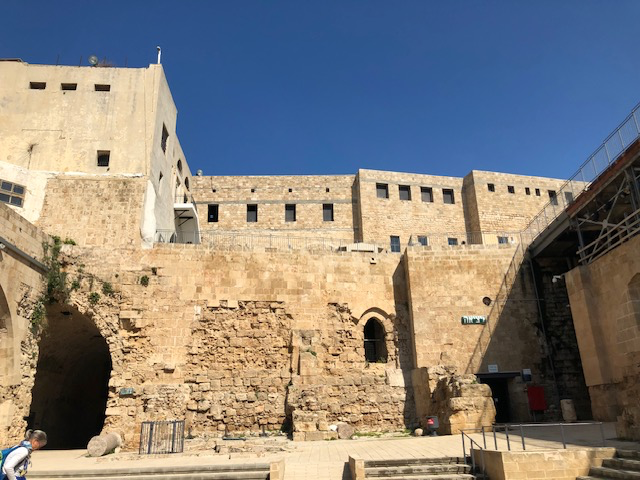
The Knights’ Halls beneath the Old City of Acre preserve one of the most substantial surviving complexes from the age of the Crusades. Their vaulted chambers belonged to the Knights Hospitaller, one of the religious and military orders that became powerful forces in the Crusader states established along the eastern Mediterranean coast.
The Crusades were a series of military expeditions that brought Western European Christians into prolonged conflict with Muslim powers in the Middle East. Although their stated purpose was often connected to Jerusalem and other Christian holy sites, they were also influenced by politics, territorial ambition, trade and competition among rulers.
The First Crusade began after Byzantine emperor Alexios I Komnenos requested military assistance against the Seljuk Turks. In 1095, Pope Urban II called upon Western Christians to travel east and recover Jerusalem. Crusading armies left Europe the following year, crossed Byzantine territory and fought their way through Asia Minor and the Levant. Jerusalem was captured in 1099. The conquest was accompanied by the killing of many Muslim and Jewish inhabitants, demonstrating the violence that would repeatedly mark the Crusading period.
The victors established four principal Crusader states: the County of Edessa, the Principality of Antioch, the Kingdom of Jerusalem and the County of Tripoli. These territories depended upon fortified cities, castles, access to Mediterranean ports and continued assistance from Europe.
Acre became one of their most important ports. King Baldwin I of Jerusalem captured the city in 1104 with the assistance of a Genoese fleet. Its harbor provided a vital connection between the Crusader states and Europe, allowing pilgrims, soldiers, merchants, supplies and wealth to move across the Mediterranean.
Among the organizations established in the region were the Knights Hospitaller. The order developed from a charitable institution created to care for sick and injured pilgrims in Jerusalem. It gradually assumed military responsibilities, protecting travelers and defending Crusader territory while continuing its medical and religious work. By 1110, the Hospitallers had received property in Acre.
The balance of power changed dramatically during the late twelfth century. Saladin united much of Egypt and Syria under his leadership and defeated the Crusader army at the Battle of Hattin in 1187. Jerusalem surrendered soon afterward, and Acre also returned to Muslim control.
The loss of Jerusalem inspired the Third Crusade. European forces began besieging Acre in 1189, and the arrival of King Richard I of England and King Philip II of France strengthened the campaign. After a long and devastating siege, the Crusaders recaptured Acre in 1191. Richard achieved several military victories but did not recover Jerusalem. An agreement with Saladin allowed Christian pilgrims to visit the holy city while it remained under Muslim rule.
Following the Third Crusade, Acre became the principal political and commercial center of the remaining Kingdom of Jerusalem. The city was divided among competing European communities and religious orders. Genoese, Venetian and Pisan merchants maintained their own districts, while the Templars and Hospitallers controlled fortified compounds.
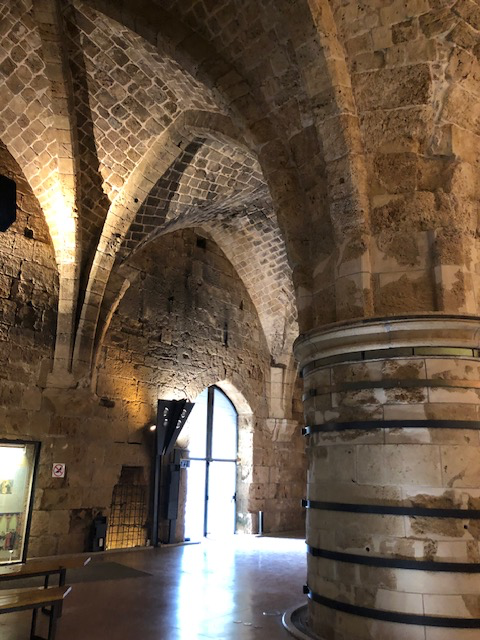
The Hospitaller complex functioned as far more than a military stronghold. It included residential quarters, warehouses, meeting chambers, water systems, a hospital and a refectory where members of the order ate together. Massive stone columns supported ribbed vaults above the principal halls. The strength of this construction allowed much of the complex to survive after the buildings above it disappeared.
Although warfare defined the Crusades, daily life in Acre also involved trade and cultural exchange. Christians, Muslims and Jews encountered one another through commerce, diplomacy, medicine and travel. European merchants traded with communities throughout the eastern Mediterranean, and ideas, artistic traditions, foods, technologies and luxury goods moved between regions. These exchanges occurred alongside continuing hostility, religious intolerance and periodic violence.
Later Crusades failed to restore lasting Christian control over Jerusalem. The Fourth Crusade never reached the Holy Land and instead captured and plundered the Christian city of Constantinople in 1204. During the thirteenth century, additional expeditions led by European monarchs produced only temporary gains. Muslim powers gradually reduced the remaining Crusader territories.
By the late thirteenth century, Acre was the last major Crusader stronghold on the mainland. In 1291, the Mamluk sultan al-Ashraf Khalil brought a large army against the city. After weeks of siege and intense fighting, the defenses collapsed. Many inhabitants were killed or captured, while others escaped by sea. The fall of Acre effectively ended the Crusader states in the Holy Land.
The Mamluks destroyed much of the captured city to prevent European forces from returning. Buildings collapsed, streets disappeared beneath rubble and the Hospitaller compound was buried. Centuries later, Ottoman Acre developed above the medieval remains, raising the city’s ground level and preserving parts of the Crusader complex below.
Modern excavation and conservation uncovered the vaulted chambers now known as the Knights’ Halls. They reveal Acre’s importance as a military stronghold, hospital center, commercial port and capital of the final Crusader kingdom. Their survival provides a physical connection to two centuries of conflict, migration, religious devotion and cultural exchange that transformed both Europe and the eastern Mediterranean.
Read More From Nancy
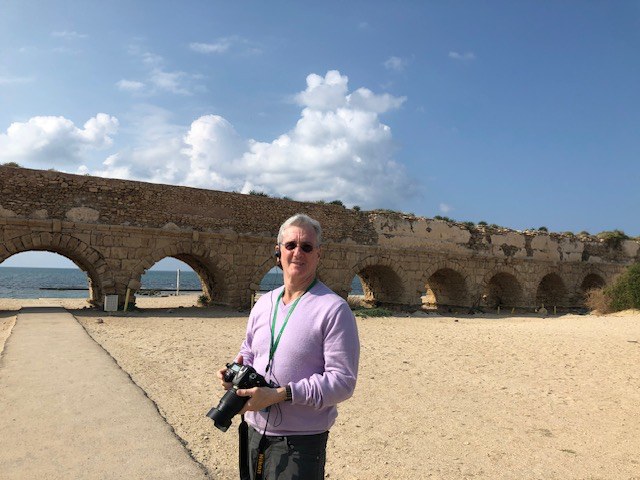
Roman Aqueduct
Stretching along the Mediterranean shoreline, the Roman aqueduct at Caesarea stands as one of the finest surviving examples of ancient engineering in the world. While visitors often come to Caesarea to see King Herod’s palace, the amphitheater, and the ancient harbor, it is this remarkable aqueduct that tells one of the city’s most extraordinary stories. […]
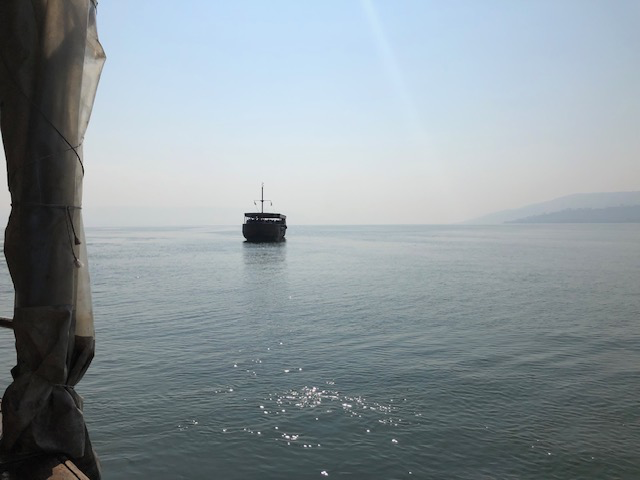
A Boat Ride on the Sea of Galilee
During our visit to Israel, Marty and I took a boat out onto the Sea of Galilee. Surrounded by hills and stretching quietly beneath the open sky, the water offered a peaceful contrast to the busy cities and crowded historic sites we encountered elsewhere in the country. Despite its name, the Sea of Galilee is […]
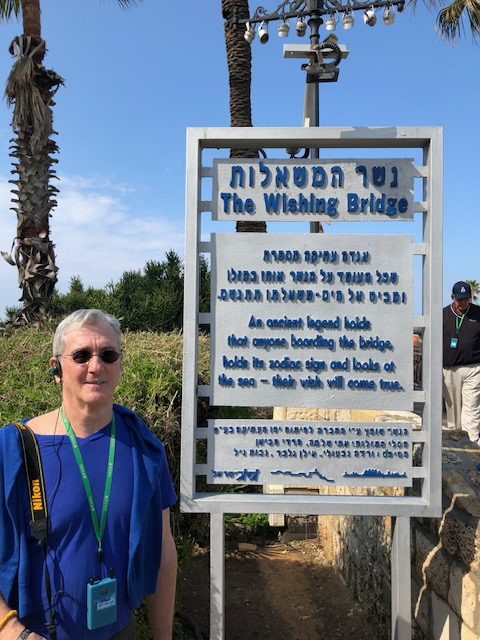
The Wishing Bridge
During our visit to Old Jaffa, we stopped at the entrance to the Wishing Bridge. The sign describes a local legend: anyone who stands on the bridge, holds the image of their zodiac sign, looks toward the sea, and makes a wish will have that wish come true. The bridge is decorated with twelve bronze […]

