Omaha Beach
When we stood on the sands of Omaha Beach at Colleville-sur-Mer, it is hard to grasp the sheer scale of what occurred here on June 6, 1944. The shoreline is now peaceful, but on D-Day it was one of the most violent and deadly battlegrounds in modern history.
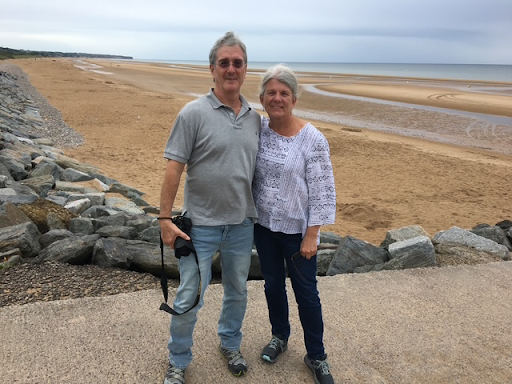
In the early hours of that morning, nearly 34,000 American troops were assigned to land on Omaha Beach as part of the first wave of Operation Overlord. They faced the heavily fortified German defense system lined with machine-gun nests, artillery, minefields, barbed wire, and concrete bunkers.
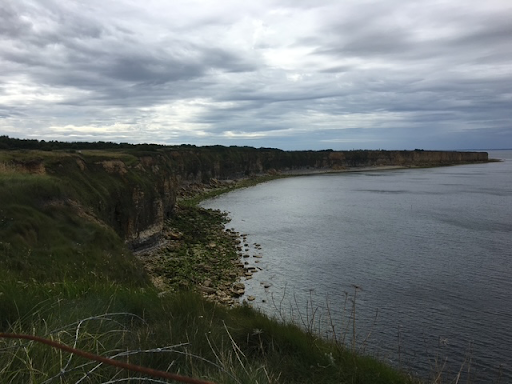
When the Americans began to come ashore at 6:30 a.m., many things went wrong including, tanks sinking offshore and deep-water forcing troops to wade under heavy fire. The results were catastrophic with over 2,000 Americans killed, missing or wounded in the first few hours. This beach saw the highest casualty count of any of the five invasion beaches.
Despite these losses, some soldiers began to move forward and slowly broke through the German lines. By nightfall, the Americans had secured a foothold on Omaha beach, opening the way for the beginning of the long campaign to liberate France.
Omaha beach stands as one of the most defining sites of World War II. This is the place where thousands of young men stormed ashore under impossible conditions. The numbers tell the story: tens of thousands landed, thousands fell and the outcome of the war shifted on this strip of sand less than five miles long.
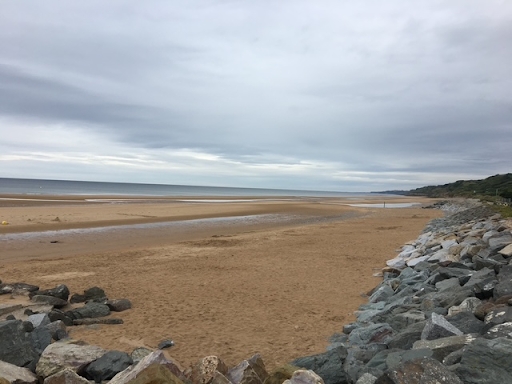
We have traveled to and stoon on many military sites, each with its own weight of history. But standing on Omaha Beach was a somber and poignant moment where the scale of sacrifice feels so tangible. This quiet shoreline carries the memory of what happened here.

Read More From Nancy
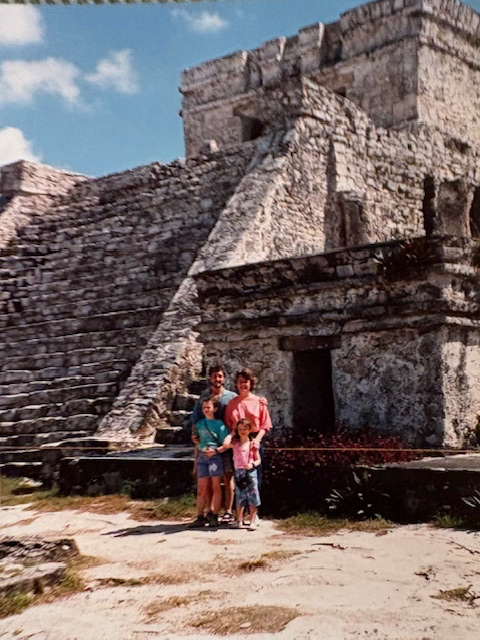
Tulum Archaeological Zone – Mexico
While vacationing in Mexico, we traveled to Tulum. We walked through the stone entrance and out toward the cliff overlooking the Caribbean Sea. The building in our family photo is part of El Castillo, the principal structure at the site. Tulum was constructed between 1200 and 1500 AD during the Late Postclassic period of Maya […]

Uluru in the Australian Outback
We have been fortunate to have traveled extensively, sometimes just for vacation, oftentimes, our adventures are attached to one of our teaching events. The last time we taught in Australia, we decided to travel into the Outback and view Uluru. Flying to the Outback is an experience. The landscape gives way to a vast, open […]
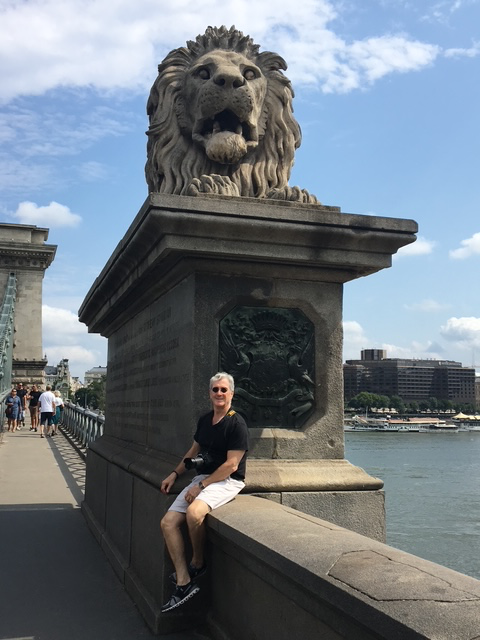
Lions on Szechenyi Chain Bridge – Budapest
Walking across the Szechenyi Chain Bridge in Budapest, feels more than just a river crossing. The bridge stretches across the Danube, linking Buda and Pest, two historic cities that once separated and later unified into modern Budapest. The bridge is both functional and symbolic. The Chain Bridge opened in 1849, becoming the first permanent bridge across […]

