Washington in Blackout
December 1941Dearest Reader,
In the December 13, 1941, letter, my grandmother described another unsettling reality of those first days after Pearl Harbor, the fear that the war might reach the American mainland. Information was fragmentary, rumors circulated freely, and no one yet knew what form the conflict would take.
She wrote simply and without drama:
“They tell us here that we are in danger of an air attack, and Washington is partially blacked out at night.”
Her words reflect the atmosphere of those days. In the immediate aftermath of December 7, the federal government feared additional attacks, and cities along both coasts were places on heightened alert. Washington, DC, as the seat of government, was considered especially vulnerable. Civil defense measures were enacted almost at once. Streetlights were dimmed, windows were covered, and government buildings reduced nighttime illumination so the city would be less visible from the air.
These partial blackouts were as much about preparedness as they were about reassurance. They signaled to the public that authorities were taking action, even as uncertainty dominated daily life. Air-raid warnings, civil defense instructions and talk of possible attacks filtered through neighborhoods and households and quiet anxieties after dark.
Set alongside her concerns about the draft and the suspension of naturalizations, this brief observation reveals how quickly the war altered the rhythm of ordinary life. The lights going out in the nation’s capital were not just a precaution, they were a visible sign that American had entered a new and uncertain chapter.
Dr. Nancy Watson
Washington
Read More From Nancy
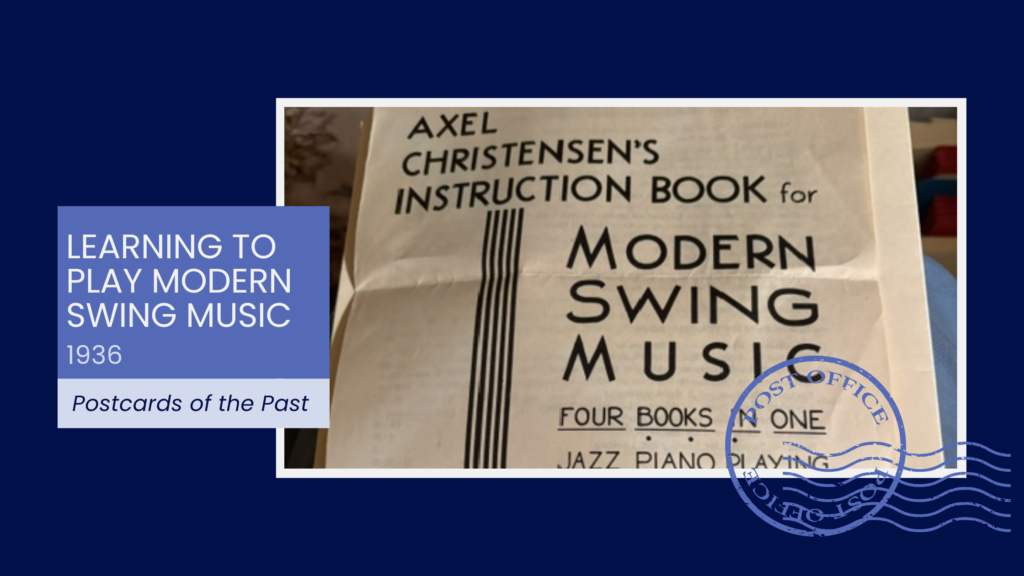
Learning to Play Modern Swing Music
Among my parents’ papers I found this $2 copy of Axel Christensen’s Instruction Book for Modern Swing Music. I don’t know whether it belonged to my mother or my father, or whether one of them actually learned to play from it. But the book tells us something about the music that surrounded their generation. Axel […]
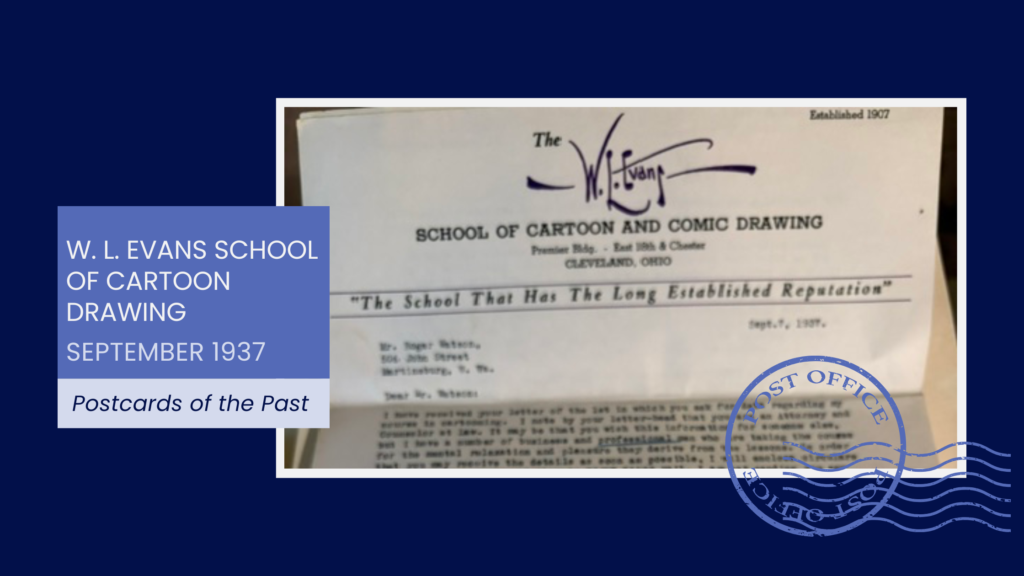
W. L. Evans School of Cartoon Drawing
Among my father’s papers is another piece of correspondence from his teenage years, this one from the W. L. Evans School of Cartoon and Comic Drawing in Cleveland, Ohio. At first glance it appears to be another promotional letter encouraging a young man to enroll in a correspondence course. Looking more closely, however, it reveals […]
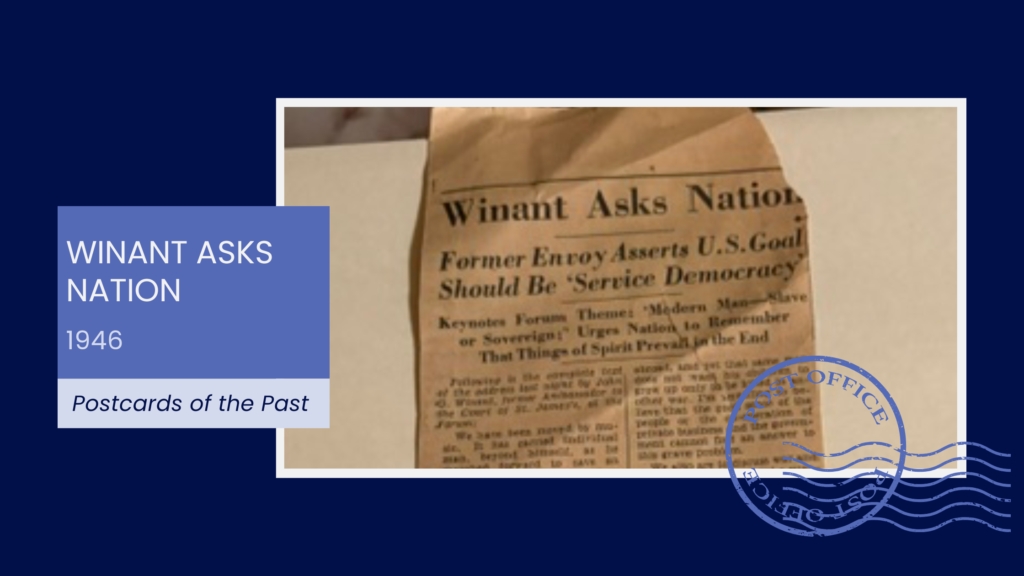
Winant Asks Nation
As I sorted through my mother’s papers, I discovered that this was not the only newspaper clipping she had saved about John Gilbert Winant. There were several. That immediately made me wonder why she followed his life so closely. Winant was more than a public figure in New Hampshire. He was one of the state’s […]

