Gonzalez-Alvarez House
This photograph brings back memories of a family visit to St. Augustine, Florida, where our daughters posed beside the marker for the González-Alvarez House, commonly known as “The Oldest House.” Although the title has been debated over the years, the site has been occupied continuously for more than three centuries and offers an important connection to the earliest years of European settlement in what is now the United State
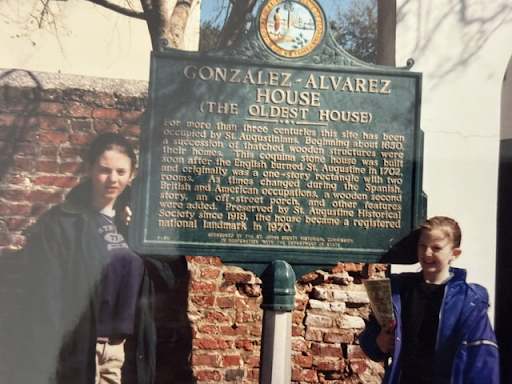
Archaeological evidence indicates that the property has been occupied since about 1650. The original wooden structures were destroyed during the 1702 British siege of St. Augustine. Soon afterward, the house was rebuilt using coquina, a locally quarried limestone composed of compressed seashells that became the signature building material of colonial St. Augustine. Over the years, the house was expanded and altered during both the Spanish and British periods, reflecting the changing needs of its occupants.
The house is named for two of its prominent owners. Tomás González, a Spanish artilleryman, purchased the property in the early nineteenth century while Florida was still under Spanish rule. Following the transfer of Florida to the United States in 1821, the home later became the residence of the Alvarez family, whose ownership reflected the city’s transition from Spanish colony to American territory. Together, the González and Alvarez families represent two chapters in the long and evolving history of St. Augustine.
The house has been preserved by the St. Augustine Historical Society since 1918 and was designated a National Historic Landmark in 1970. Today it serves as a reminder of the city’s rich colonial heritage and the many generations of families who lived here long before Florida became part of the United States.
Read More From Nancy
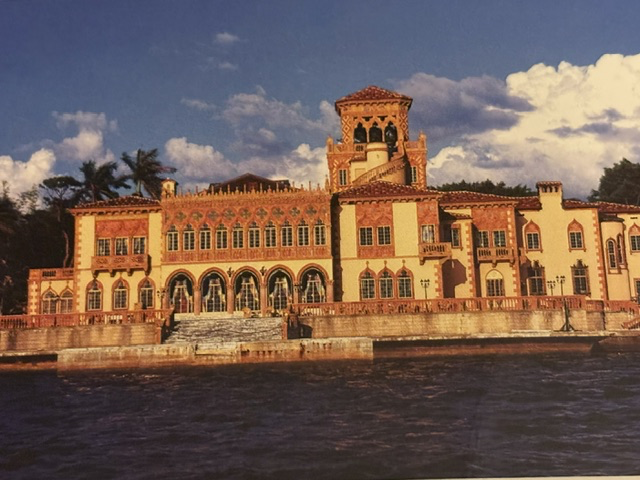
Ringling’s Ca’d’Zan
Another part of the country, yet still another extraordinary express of wealth and ambition: The Ringley home in Sarasota, Florida. Here the grandeur of America’s Gilded Age is captured as vividly as the mansions of Newport, R.I. Known as Ca’dZen, the waterfront mansion was built in the 1920s for circus magnate John Ringley and his […]
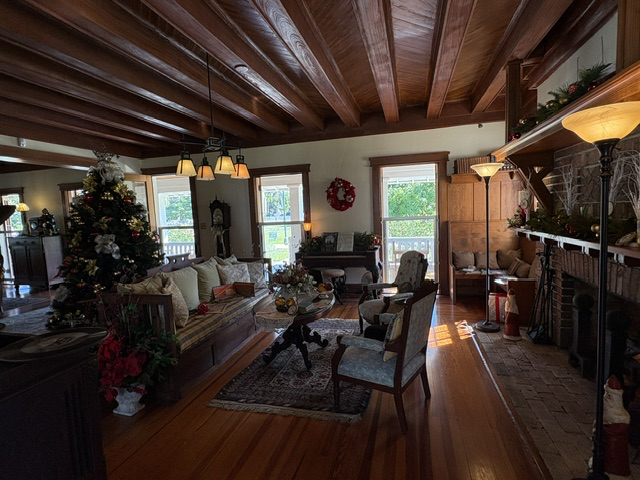
Ford’s The Mangoes
During our visit to the Edison and Ford Winter Estates in Fort Myers, we toured The Mangoes, the winter home of Henry and Clara Ford. In 1916, Ford purchased the property next to Thomas Edison’s Seminole Lodge so that he and his wife could spend their winters close to their dear friends. Although Ford had become […]
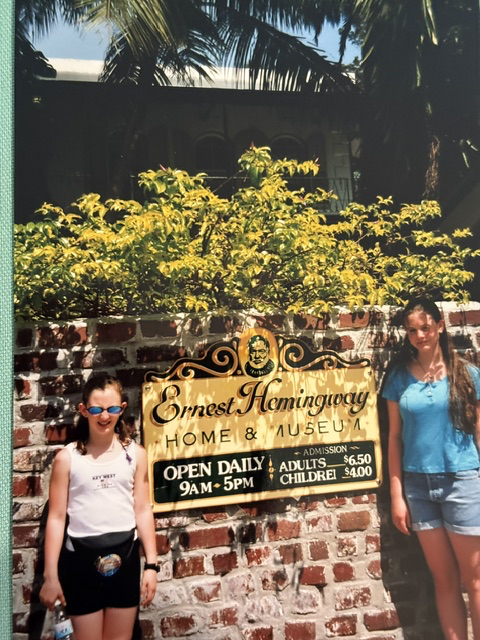
Ernest Hemingway House
A trip to the Florida Keys would not be complete without visiting the Ernest Hemingway Home in Key West. During our family vacation, we made our way to this famous house where one of America’s most celebrated writers lived and worked during some of the most productive years of his career. Built in 1851, the house is […]

