John Bartlett Monument
In Amesbury, there is a prominent statue of Josiah Barlett, a figure whose life connects this small New England town to the founding of the nation.
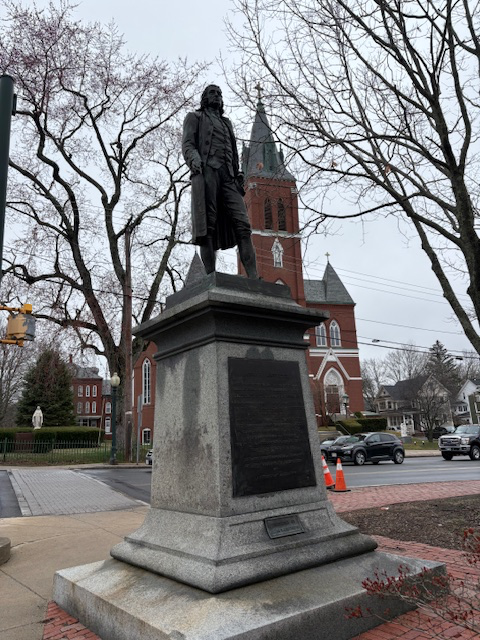
Josiah Bartlett was born in 1729 in what was then part of Amesbury. Trained as a physician, he built a reputation for both skill and dedication.
As tensions grew between the American colonies and Great Britain, Bartlett became involved in the movement for independence. He served as a delegate to the Continental Congress and in 1776, became one of the signers of the Declaration of Independence. He holds a small but notable distinction, he was the first to sign after John Hancok, placing his name prominently among those who committed to the cause.
Bartlett later served as a judge, chief justice and eventually as Governor of New Hampshire, continuing his public service in the early years of the new nation.
The statue in Amesbury honors this full arc of his life: physician, patriot and leader. The plaque reinforces this legacy:
“Born at Amesbury, Massachusetts, 1729. Died at Kingston, New Hampshire, 1795. Patriot, scholar, statesman. A delegate to the Continental Congress. A signer of the Declaration of Independence. With Stark at Bennington. A member of the convention which ratified the Constitution of the United States. Chief Justice, President, and first Governor of New Hampshire. Not more illustrious for public services than for private virtues.”
The monument, erected on July 4, 1888, reflects how a later generation chose to remember him, through his public service, his leadership and his character.
The presence in Amesbury is meaningful. This is not where Bartlett built his political career, but it is where his life began. The statue anchors his national significance to a local place, reminding visitors that the individual who shaped the country often came from small communities.
Read More From Nancy
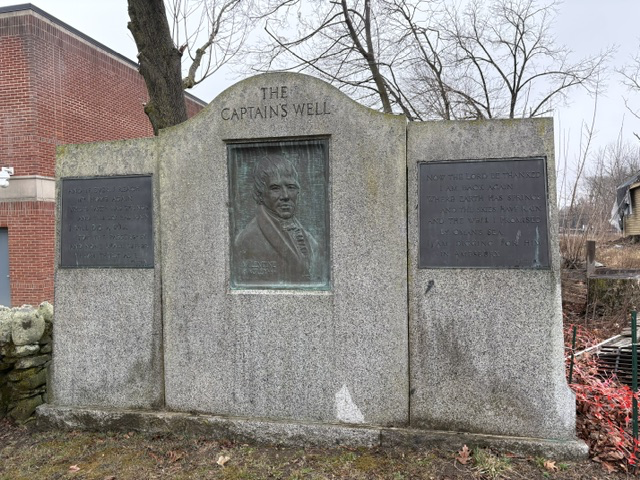
The Captain’s Well
This monument in Amesbury is known as The Captain’s Well, and it quietly preserves pat of the town’s maritime past. The restored stone wall, complete with its long wooden sweep and bucket arm, reflects a time when wells were central gathering places within a community. Before modern plumbing, places like this supplied water not only for homes, but […]
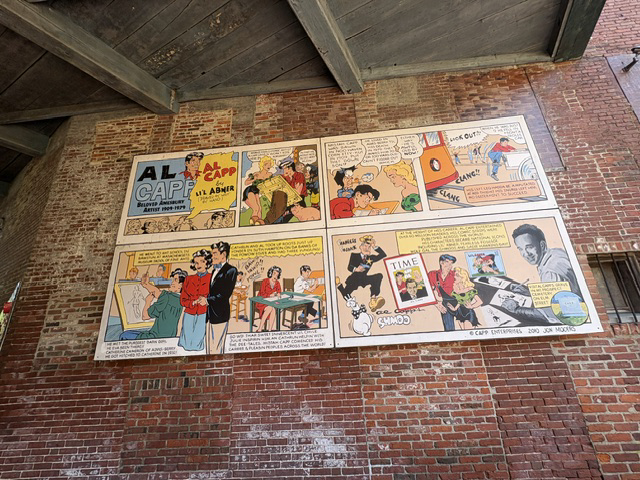
Al Capp and Li’l Abner
Walking through the old mill area in downtown Amesbury, I came across this enormous comic strip painted directly onto the brick wall beneath the archway. It honors cartoonist Al Capp and the remarkable career he built while making Amesbury his home. Al Capp was born Alfred Gerald Caplin in New Haven, Connecticut, in 1909. He […]
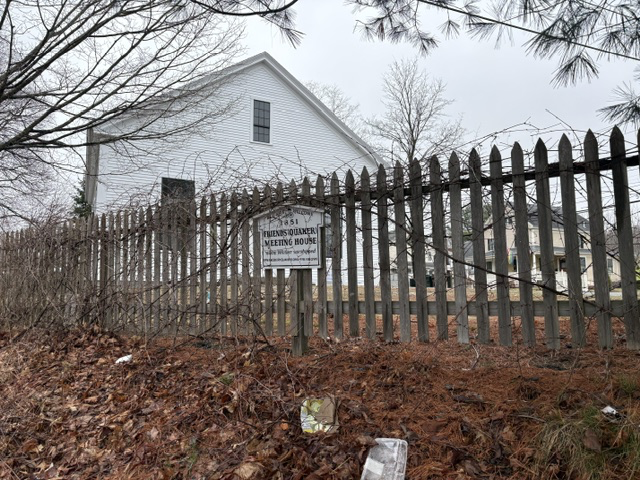
Quaker Meeting House
This is the old Friends Quaker Meeting House in Amesbury, closely connected to the life of ohn Greenleaf Whittier and the Quaker traditions that shaped both his beliefs and his writing. Whittier was raised in a Quaker family, and the values of the Society of Friends remained central to his life. The Quakers emphasized simplicity, equality, peace, personal […]

