Letter to Induction Center – August 1942
In August of 1942, my father found himself in a place that marked a turning point, not just in his life, but in the lives of millions of young men across the country. His letter, addressed to Major S,S. Bobes at the induction station in Clarksburg, WV, brings that moment into sharp focus.
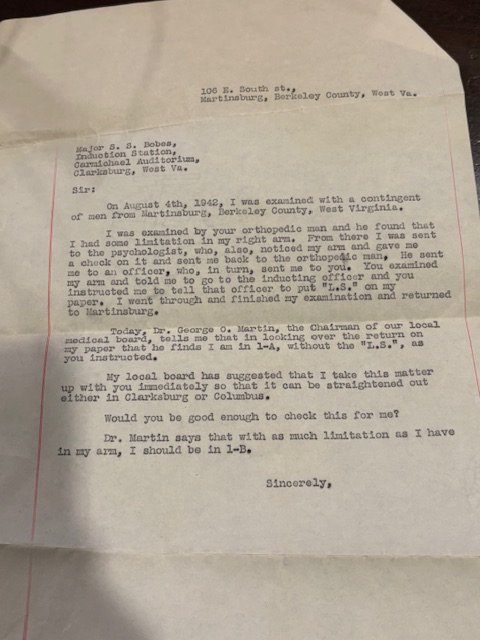
The examination took place at Carmichael Auditorium a site temporarily transformed into part of the nation’s wartime processing system. Men arrived in grips, often by country. It was an organized, methodical process, designed to move large numbers of young men efficiently through medical and psychological evaluation and into military service.
He describes the sequence: an orthopedic doctor examined him and noted a limitation in his right arm. He was then sent to a psychologist, who observed the same issue. That observation about his arm, led to another orthopedic evaluation and ultimately, to an examination by Major Bobes himself. After this review, the instruction was given to place LS on his record, an indicator that suggested some level of limited service.
But when the process was concluded, my father was classified as 1-A, fully fit for military duty. My father did not accept this classification and tis letter to Major Bobes, he is attempting to influence how he will be placed within a system that is rapidly expanding and increasingly difficult to resist.
This moment sits within a larger national shift.
Following the Attack on Pearl Harbor, the United States moved quickly from preparation into full mobilization. While there was an initial surge of patriotism, more than one million men volunteered for service in the immediate aftermath, the majority of those who would serve did not enter that way.
By the end of the war:
16 million Americans had served in the armed forces
6 million had enlisted voluntarily
10 million were inducted through the draft
By 1942, the draft had become the primary pathway into military service, and induction centers were operating at full capacity. There were not isolated facilities but were part of a nationwide network created under the Selective Training and Service Act of 1940, processing men in a steady and continuous flow.
My father’s letter captures a single day within that system but also shows a young man moving through a structured, impersonal process. Yet he is still trying to assert some influence over the outcome.
Read More From Nancy
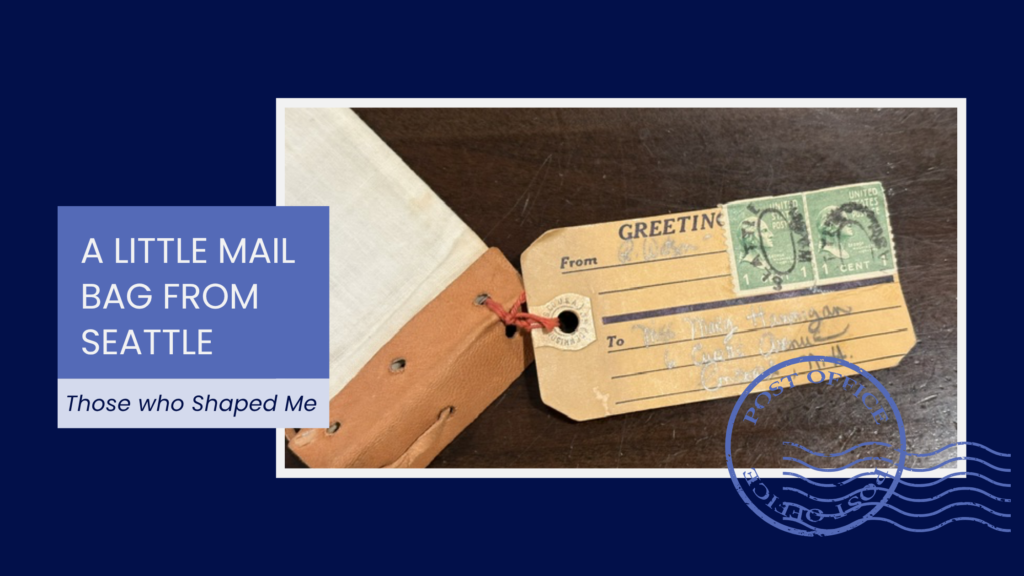
A Little Mail Bag from Seattle
The pouch itself deserves a closer look. This was the kind of inexpensive novelty souvenir that could be purchased, filled with small photographs, addressed, stamped, and sent through the mail. The miniature mailbag turned an ordinary packet of souvenir pictures into something more memorable. More than eighty years later, the original postage stamps remain on […]
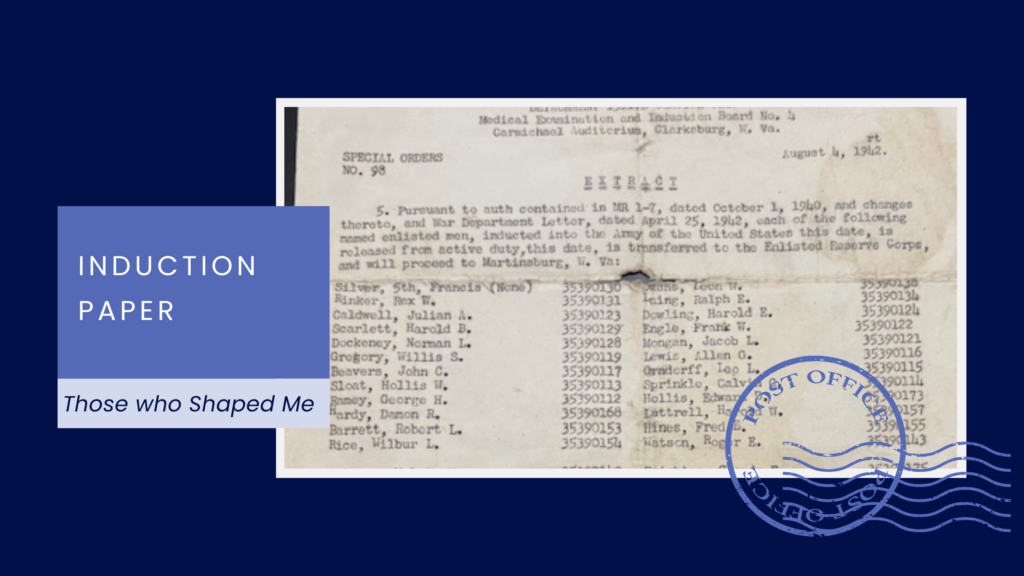
Induction Paper
What this document records is a clearly defined sequence in my father’s entry into military service during World War II, set within the structured and highly organized process of Army induction in 1942. On August 4, 1942, my father, Roger E. Watson, was among a group of men processed through the induction center in Clarksburg, West Virginia. […]
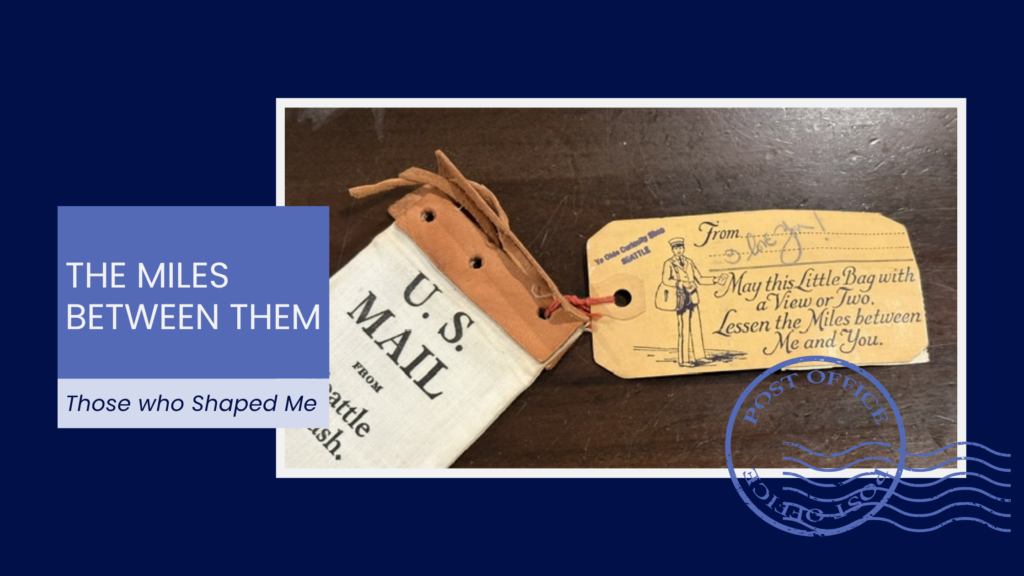
The Miles Between Them
Among the papers my mother saved is a small cloth pouch that, at first glance, might be easy to overlook. Printed across it are the words “U.S. Mail from Seattle, Wash.” A leather strip closes the bottom, and still attached to it is the original mailing tag. The tag is addressed to Miss Mary Hannigan, […]

