A Christmas Card
1943Dearest Reader,
In a box of saved letters and photographs, I found a Christmas card my grandmother sent to my father in 1943.
The front is not decorated with wreaths or candles. There is no snow, no manger scene, no holly. Instead, it bears an American flag, The Liberty Bell and a white eagle: symbols of a nation at war. Across the front: “Christmas Greeting to you, Son in the Service“.
It is a Christmas card stripped down to essentials.
The card was produced by Forget-Me-Not Greeting Cards, a line introduced in 1939 and widely distributed across the United States during the war years. Sold in neighborhood pharmacies and five-and-dime-stores, these were the everyday cards of American families: affordable, accessible and designed to speak plainly to the moment. During World War II, publishers shifted their artwork to reflect the national mood. Patriotism replaces ornamentation. Flags and eagles stood where holly and bells once did. Even Christmas acknowledged the war.
Inside, the printed verse reads:
To wish you, SON, the special cheer that Christmas always brings,
To hope the coming New Year, too, will give you all good things,
And if you’re here or miles away, please keep this thought in mind:
You’re always close in every heart of those you left behind.
The words are simple. Measured. Reassuring
In 1943, Christmas in America was marked by ration books and uncertainty. Sugar, gasoline, butter and meat were carefully counted. Families followed troop movements in newspapers. Blue star hung in windows. Sons were far from home.
In 1943, mail was a lifeline. Letters and cards carried home inside them.
This card survived, it outlived the war and both my grandmother and father.
Dr. Nancy Watson
Washington
Read More From Nancy

Killed in Action
This is one of those pieces of history that doesn’t come from a monument or museum, but from something saved and carried forward without explanation. I found this newspaper clipping among my parent’s papers. It’s narrow and worn, but once I stopped to read it, it holds my attention; At the top are the words: “Killed in […]
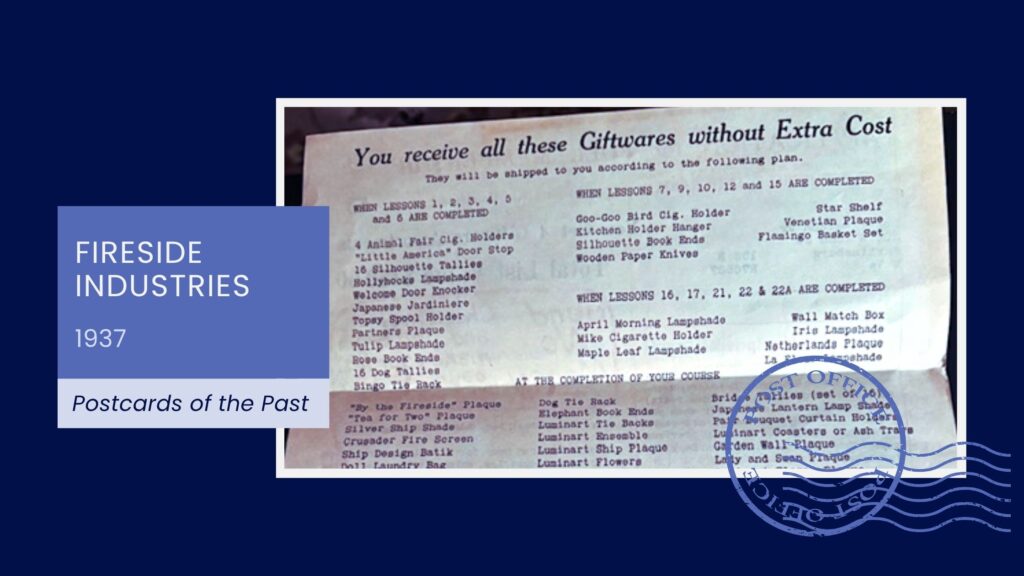
Fireside Industries
Another company that reached out to my father was Fireside Industries of Adrian, Michigan. They offered him a free rug hooking course, an invitation to learn a craft that could be done at home and perhaps turn into a source of income. But the offer did not stand alone. With membership, he would also receive […]
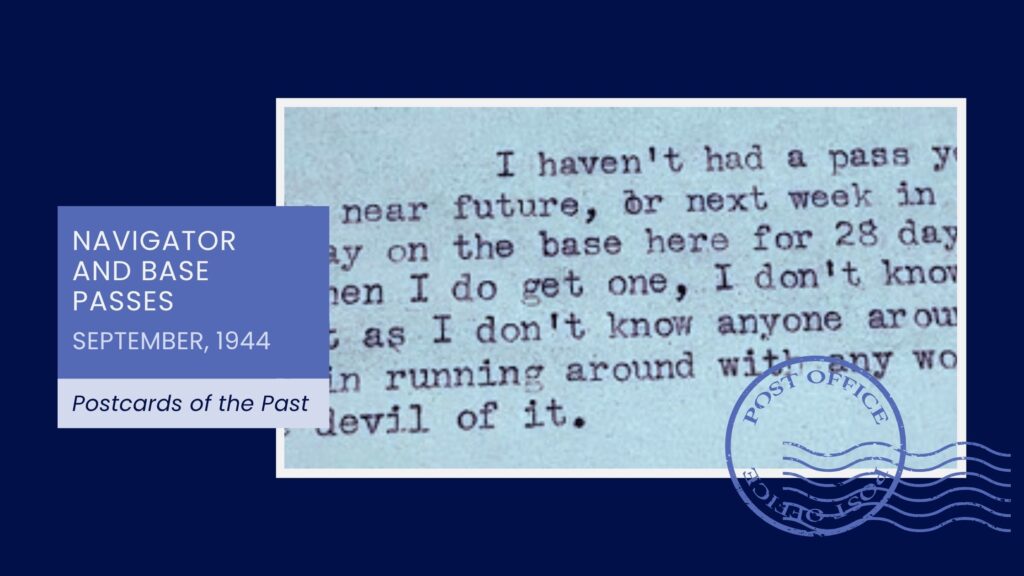
Navigator and Base Passes
In a letter dated September 3, 1944, Charlie wrote to my father from Santa Ana, California. His letterhead says Aviation Cadet, and he relates that he has been classified as a Navigator in the United States Army Air Forces. That classification was not casual. It meant he had passed the Army aptitude testing with strong marks […]

