“Great Sickness of 1754”
In the center of Holliston, near the historic First Parish church, lies the Central Burying Ground, a quiet cemetery that preserves the early history of the town and the people who first settled there.
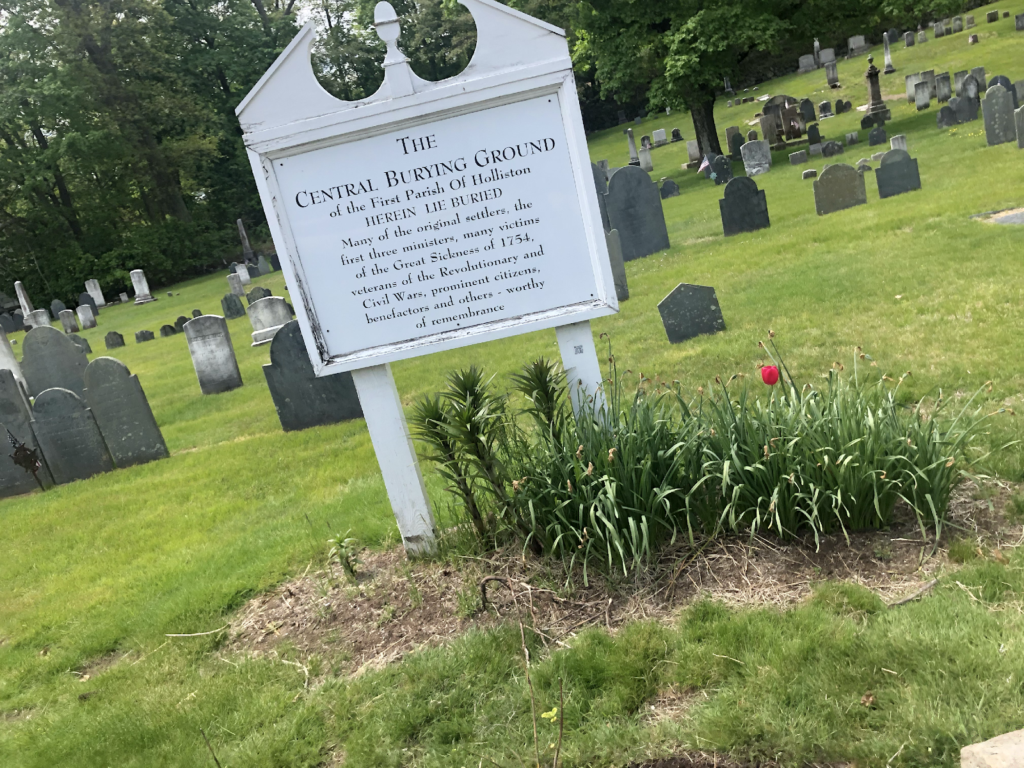
Holliston was originally part of neighboring towns before becoming its own community in 1724. Like many New England towns of that period, the establishment of the town was closely tied to the creation of a First Parish, the local Congregational church that served as a center of both religious and civic life. The burying ground near the church became the resting place for many of the town’s earliest residents.
The cemetery contains graves connected with what local records describe as the “Great Sickness of 1754” epidemics were a recurring reality in 18th century New England. Illnesses such as smallpox, dysentery, and other infectious diseases sometimes swept through communities with devastating speed. The reference to the Great Sickness marks a particularly severe outbreak in Holliston that claimed a number of residents in a short period of time, leaving its mark in the clustering of burial dates from that year.
The exact disease responsible for the outbreak is not known. Colonial communities rarely recorded medical details. In town records and church registers, illness was often described simply as “fever”, a “distemper” or a great sickness. Because of this, historians must rely on burial patterns, brief references in local documents and knowledge of the types of epidemics common in New England during the 18th century.
Several diseases circulated regularly in the region at that time. Smallpox was one of the most feared, periodically sweeping through towns and causing widespread mortality. Influenza and other respiratory illnesses could also spread more rapidly through communities. Another frequent cause of sudden outbreaks were dysentery, sometimes called the “bloody flux”, which spread through contaminated water and was particularly deadly during the warmer months.
Many historians believe dysentery may have been responsible for the Holliston outbreak because it often produced the kind of sudden wave of deaths seen in colonial burial records. But it remains impossible to identify these illnesses with certainty.
What is clear is that the epidemic made a deep impression on this small town.