Brandenburg Gate
While visiting Berlin, the Brandenburg gate quickly becomes more than just a landmark, it becomes a focal point of the city’s history.
Standing at Pariser Platz, we faced a structure built between 1788 and 1791 under King Frederick William II of Prussia. Designed by architect Carl Gottheard Langhans, the gate was inspired by classical Greek architecture. Its twelve Doric columns form five passageways, creating a monumental entrance to what was once the road to Bradenburg an der Havel.
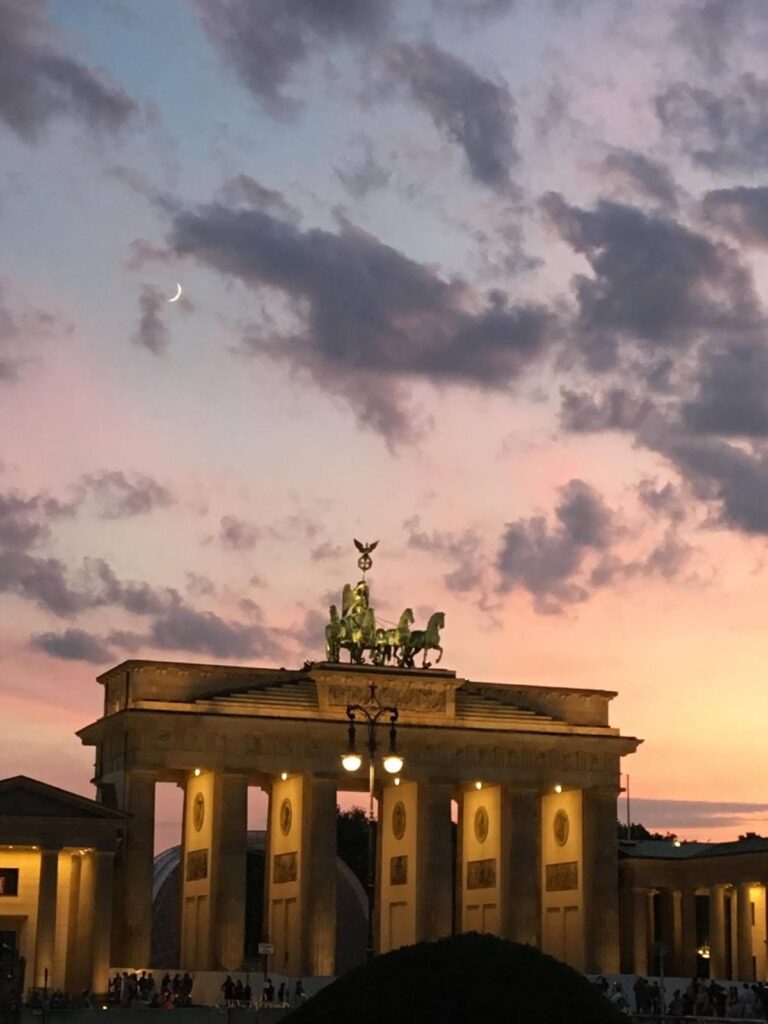
Originally, the gate symbolized peace. It was constructed as a ceremonial entrance to the city and represented order, enlightenment ideals and the strength of the Prussian state.
Atop the gate sits the Quadriga, a sculpture of a chariot drawn by four horses, driven by a female figure. Originally intended as Eirene, the goddess of peace, the figure later came to represent Victoria, the goddess of victory. In 1806, after defeating Prussia, Napoleon removed the statue and transported it to Paris as a symbol of conquest. After Napoleon’s defeat, the Quadriga was returned to Berlin and reinstalled in 1814, now carrying the Iron Cross, a symbol of Prussian military success.
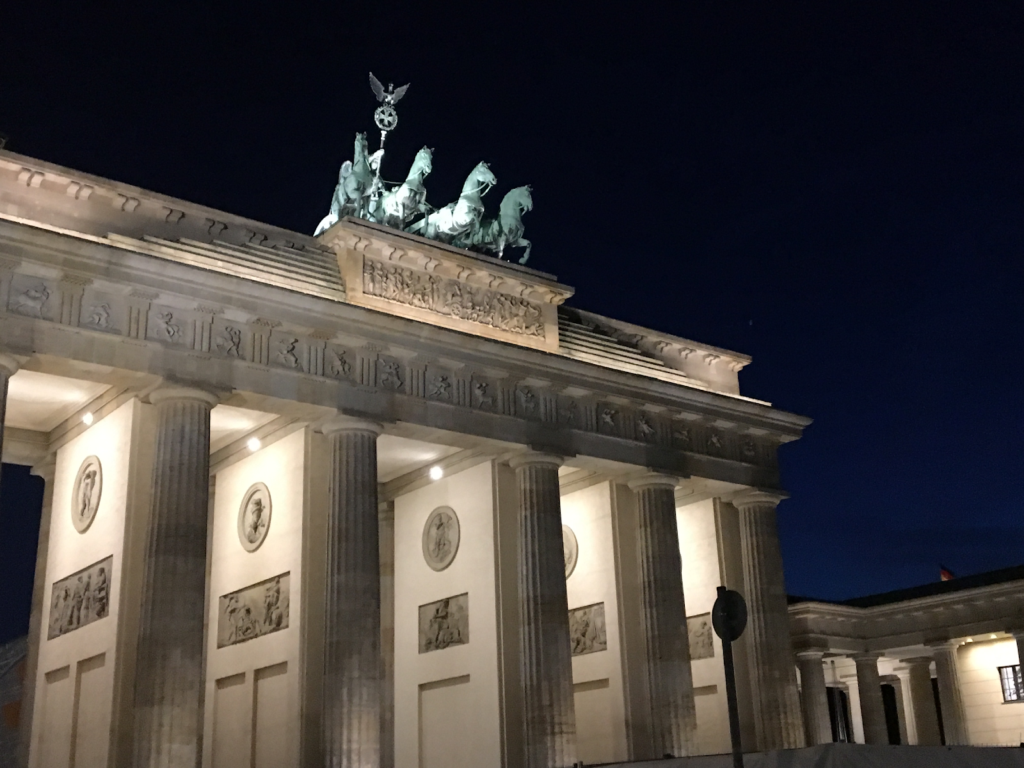
The gate survived World War II but suffered significant damage. When Berlin was divided after the war, the Brandenburg Gate stood in the border zone between East and West Berlin. It became physically inaccessible, sitting behind the Berlin Wall in what was known as the “death strip”. For nearly three decades, it stood isolated, becoming a symbol of division.
When the Berlin Wall fell in 1989, crowds gathered at the gate. It transformed into a symbol of reunification. It has represented monarchy, military power, occupation, division and reconciliation. Few structures have embodied so many phases of national history.
The Brandenburg Gate remains one of the most recognized symbols of Germany.
Read More From Nancy
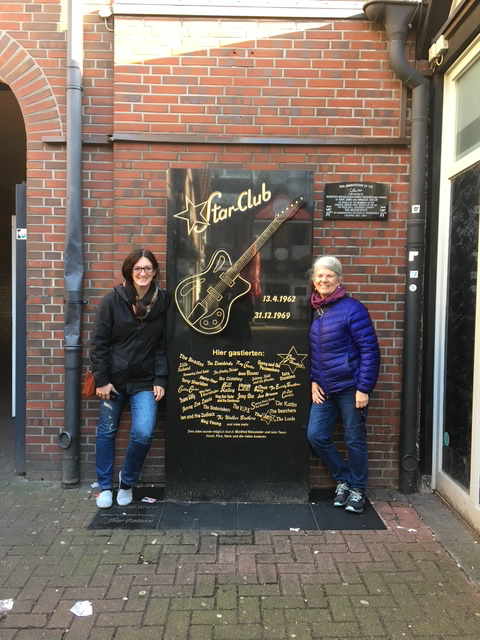
The Star Club
While traveling through Hamburg, Germany, Erin and I made a point of visiting one of the most famous addresses in rock-and-roll history. Today, there is little to suggest what once stood here, but this plaque marks the location of the legendary Star-Club, one of the most influential music venues of the twentieth century. The Star-Club […]
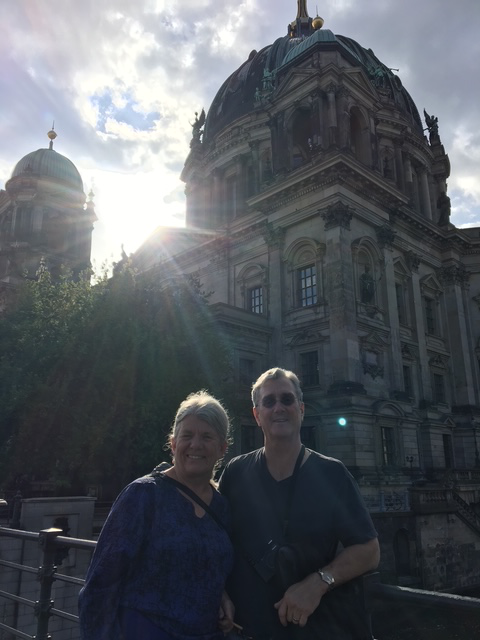
Berliner Dom
When Marty and I visited Berlin, our timing happened to coincide with a celebration of Martin Luther. It was the 500th anniversary of the Protestant Reformation in 2017, commemorating Luther’s posting of the Ninety-Five Theses in Wittenberg on October 31, 1517. Throughout Germany, churches were filled with visitors who had traveled to take part in […]
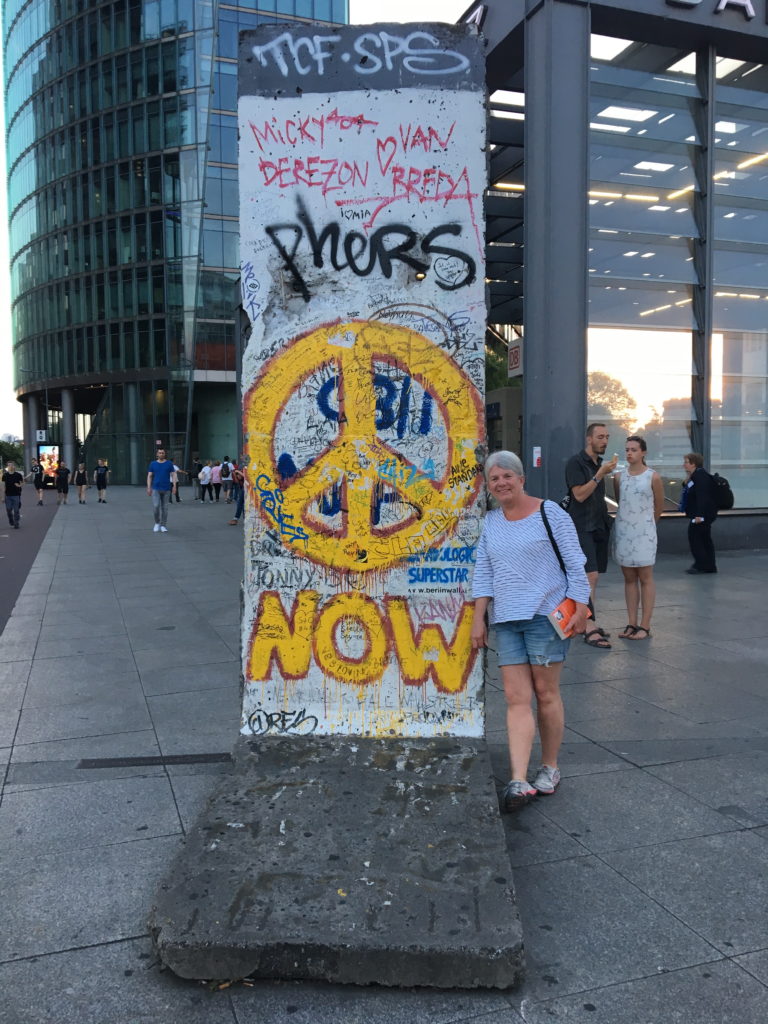
A Piece of the Berlin Wall
During our travels in Germany, I stopped for a photograph beside one of the surviving sections of the Berlin Wall. For nearly twenty-eight years, from 1961 until 1989, the Wall divided East and West Berlin and became one of the most powerful symbols of the Cold War. Families, friends, and neighbors were separated overnight, and […]

