Archaeological Zone
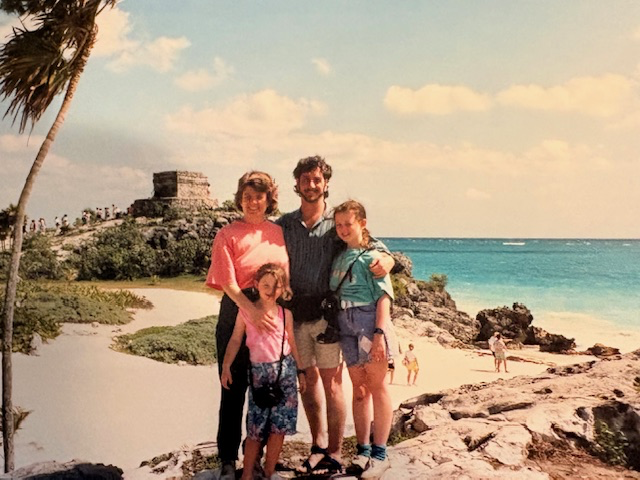
While vacationing in Mexico, we traveled to Tulum. We walked through the stone entrance and out toward the cliff overlooking the Caribbean Sea. The building in our family photo is part of El Castillo, the principal structure at the site.
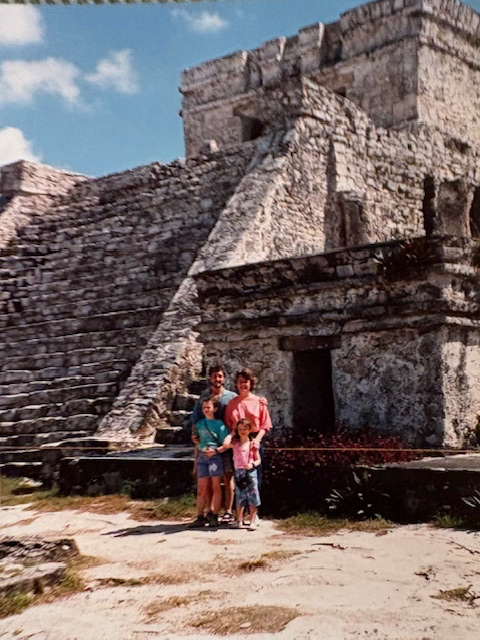
Tulum was constructed between 1200 and 1500 AD during the Late Postclassic period of Maya civilization. It functioned primarily as a fortified trading port. Unlike earlier Maya cities that emphasized ceremonial pyramids, Tulum was developed during a later phase of Maya civilization that focused on coastal commerce and regional defense.
The name “Tulum” means “wall” in Yucatec Maya. Archaeological evidence suggests the settlement likely supported a population of several hundred to a few thousand inhabitants. Tulum’s location made it strategically important as a trading hub, linking inland cities with coastal trade routes. Canoes traveled along the coast trading obsidian, jade, salt, cacao, honey, cotton textiles and ceramics.
When Spanish explorers sailed along the coast in 1518, they recorded seeing a walled city that corresponds to Tulum. It was still occupied at the time of European contact. Within several decades, however, the population declined.
Today, Tulum is preserved as an archaeological zone managed by Mexico’s National Institute of Anthropology and History. Our vacation to Mexico included plenty of beach time but one of the memorable parts of the trip was the time we explored Tulum.
Read More From Nancy
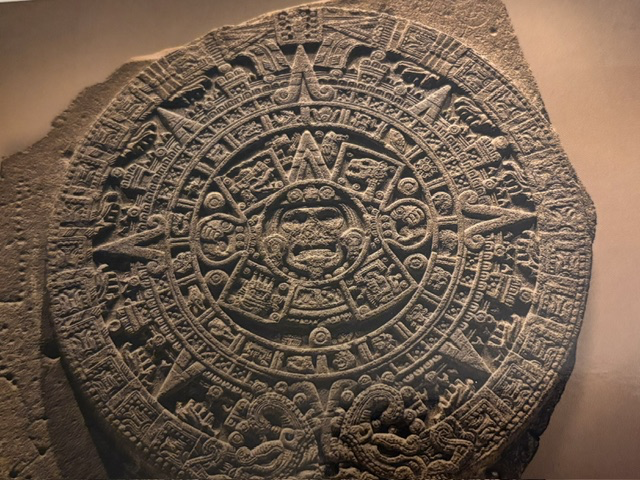
Aztec Calendar Stone
As part of my visit to Mexico City with Erin for my 65th birthday, one of the experiences I most looked forward to wasexploring the city’s museums, historic homes and cultural sites. Mexico City is layered with history at every turn from ancient civilizations. colonial architecture, political movements, art, religion and modern life all existing together in one […]
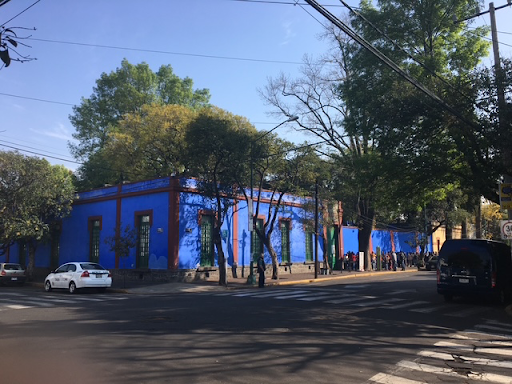
La Casa Azul
In 2018, Erin and I had the opportunity to visit the Frida Kahlo Museum in Mexico City: La Casa Azul. This vibrant blue home is where she was born, lived, created and ultimately died. Walking through her sunlit courtyard and rooms, we felt the presence of a woman whose life was defined by color and resilience. Physical […]

