Uspenski Cathedral
Standing in front of Uspenski Cathedral, Emmy and I wonder about this impressive building. The cathedral was completed in 1868, when Finland was an autonomous Grand Duchy within the Russian Empire. Placing the cathedral on this rocky hill was meant to be visible from the harbor, a public declaration of Orthodox Christianity in the capital and a reminder of the eastern cultural influence.
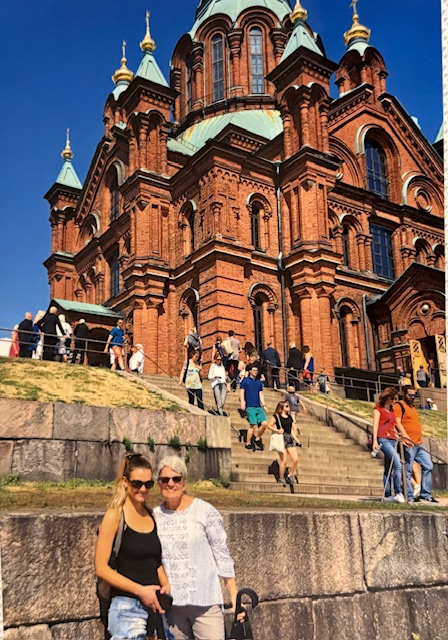
Orthodox Christianity had reached what is now Finland before the Cathedral was built spreading westward through medieval trade routes. While Lutheranism later became the dominant faith, Orthodoxy endured. Uspenski Cathedral became the most prominent symbol of that tradition in the nation’s capital.
Even the bricks of this cathedral tell a story. Many of them were salvaged from the ruined Bomarsund Fortress after the Crimean War. They were repurposed from a military stronghold into a sacred monument. The structure’s Russian-Byzantine style links it visually to centuries of Orthodox church architecture across Eastern Europe.
The thirteen domes crowning the roof has religious meaning: Christ is at the center, surrounded by the Twelve Apostles. In Orthodox symbolism, the domes represent the heavens.
This photo captures a moment in front of a cathedral born from empire, built from the remnants of war, and devoted to a faith that has quietly threaded through Finland for centuries. Uspenski Cathedral is a dramatic landmark, a declaration in architecture, built on a rocky rise above the Baltic and woven into Helsinki’s horizon.
Read More From Nancy
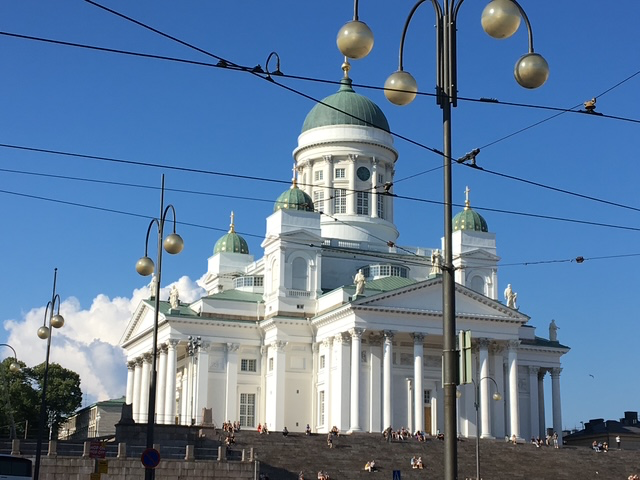
Helsinki Cathedral
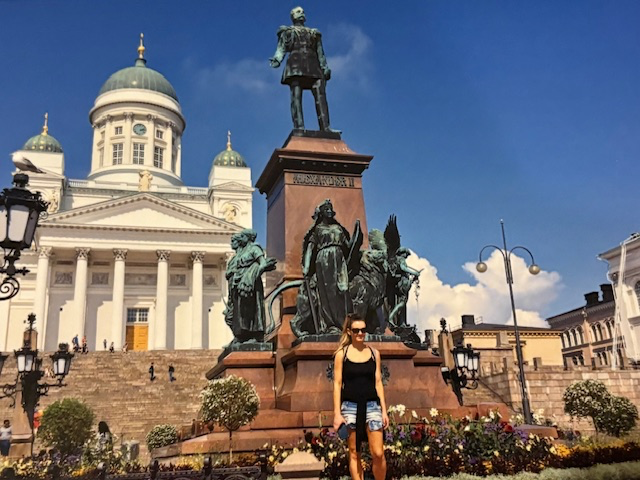
Rising above Senate Square, Helsinki Cathedral is one of the most recognizable landmarks in Finland. Its white walls, green copper domes, and broad staircase dominate the historic center of Helsinki and were deliberately designed to do so. The cathedral was designed by German-born architect Carl Ludvig Engel as part of an ambitious rebuilding of Helsinki […]
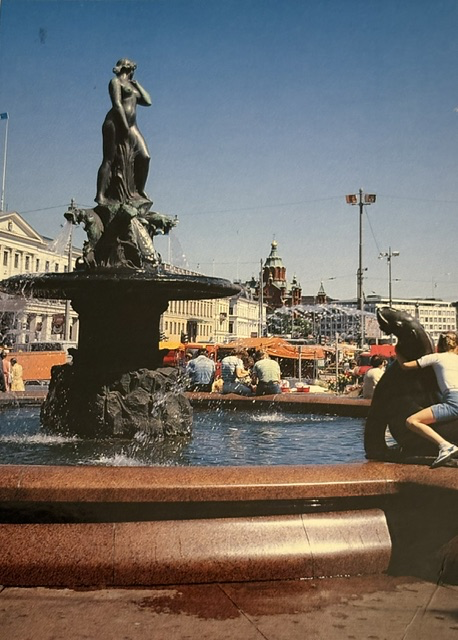
Havis Amanda Fountain
Upon arriving in Helsinki, Finland with Emmy, we hired a local guide to introduce us to the city and its history. One of our stops was the Havis Amanda Fountain, one of Helsinki’s beloved landmarks. Unveiled in 1908 and created by sculptor Ville Vallgren, the bronze figure rising from the sea symbolizes the birth of Helsinki and its close relationship […]
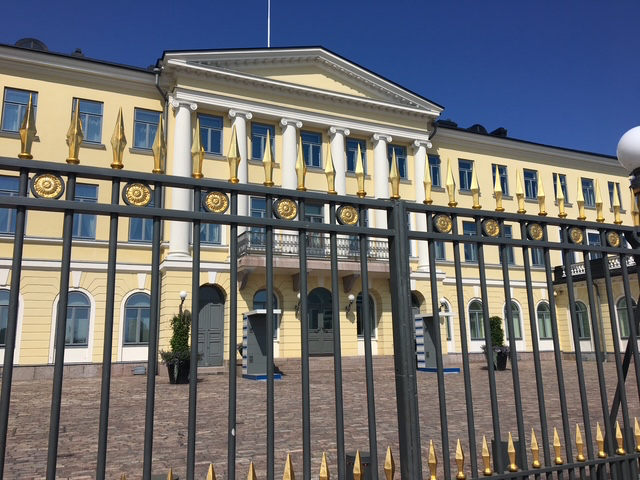
Government Palace
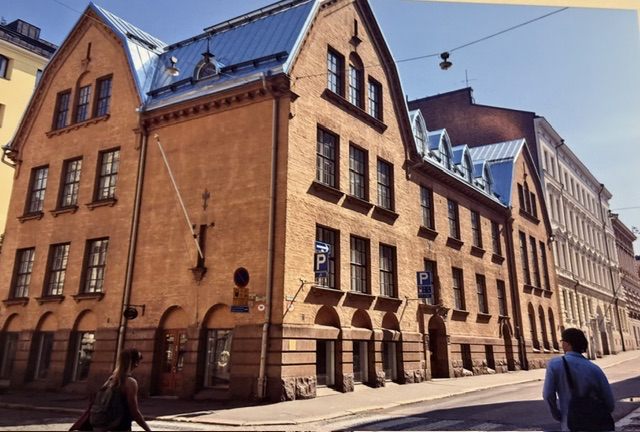
On our walking tour through Helsinki, we passed this stately yellow facade of the Government Palace. This building has been at the center of Finnish government for over two centuries. Designed in the early 1800s, the building was originally constructed when Finland was under Russian rule. It was first used by the Imperial Senate of Finland, making it one […]

