Ghandi Smriti
More than a decade ago, on my second trip to India, I visited one of the most memorable places I have ever stood: Gandhi Smriti, the site where Mahatma Gandhi was assassinated.
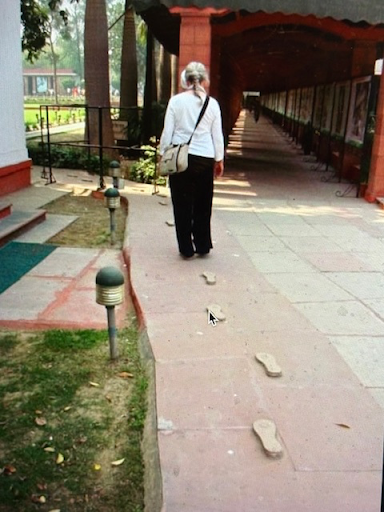
What made this visit so moving were the footprints. Set into the stone pathway, I walked where Gandhi took his final steps on January 30, 1948. I walked slowly along this path, aware that each step mirrored Gandhi’s own. He was making his way to evening prayer when he was assassinated. It was impossible not to feel the weight of these footprints. Here were the last steps of a man whose life had been devoted to nonviolence.
Gandhi Smriti was where Gandhi spent the final 144 days of his life. The house is modest which reflects the way Gandhi chose to live. He occupied a simple room, slept on the floor and his daily routine was disciplined consisting of prayer, correspondence, walking and conversation.
Gandhi’s life was defined by a commitment to nonviolence and the pursuit of truth through peaceful resistance. He led India’s independence movement by chellengine colonial rule with insisting that means mattered as much as ends. His influence extended far beyond India as he shaped global movements for justice and civil rights, including those led by Martin Luther King, Jr.
Standing at the site of his assassination, was powerful. Here was a man who rejected violence and was killed by it. That visit has stayed with me for all this time, long after I left Delhi. Following Gandhi’s footsteps was not a reenactment of history, it was more about confronting it. The path invites reflection on courage, humility and the cost of living by one’s principles.
For me history is not distant or academic but profoundly human: one life one path living life deliberately.

